 Dracula Castle Tours
Poenari Castle: Vlad the Impaler's Real Fortress
Poenari Castle is the ruined hilltop fortress in Arges County that Vlad the Impaler rebuilt around 1459 and used as one of his main strongholds, and it is the castle with the strongest documented link to the real man behind the Dracula legend. It sits on Mount Cetatea above the Arges valley, near the southern end of the Transfagarasan road, and you reach it on foot by climbing 1,480 concrete steps through the forest. This guide covers where it is, its history, the climb, tickets and hours, the reopening after major restoration works, and how it compares with Bran Castle, the castle marketed as Dracula's. One thing to know before you plan: none of the Dracula Castle tours compared on this site goes to Poenari, so getting there means your own car and a full day.
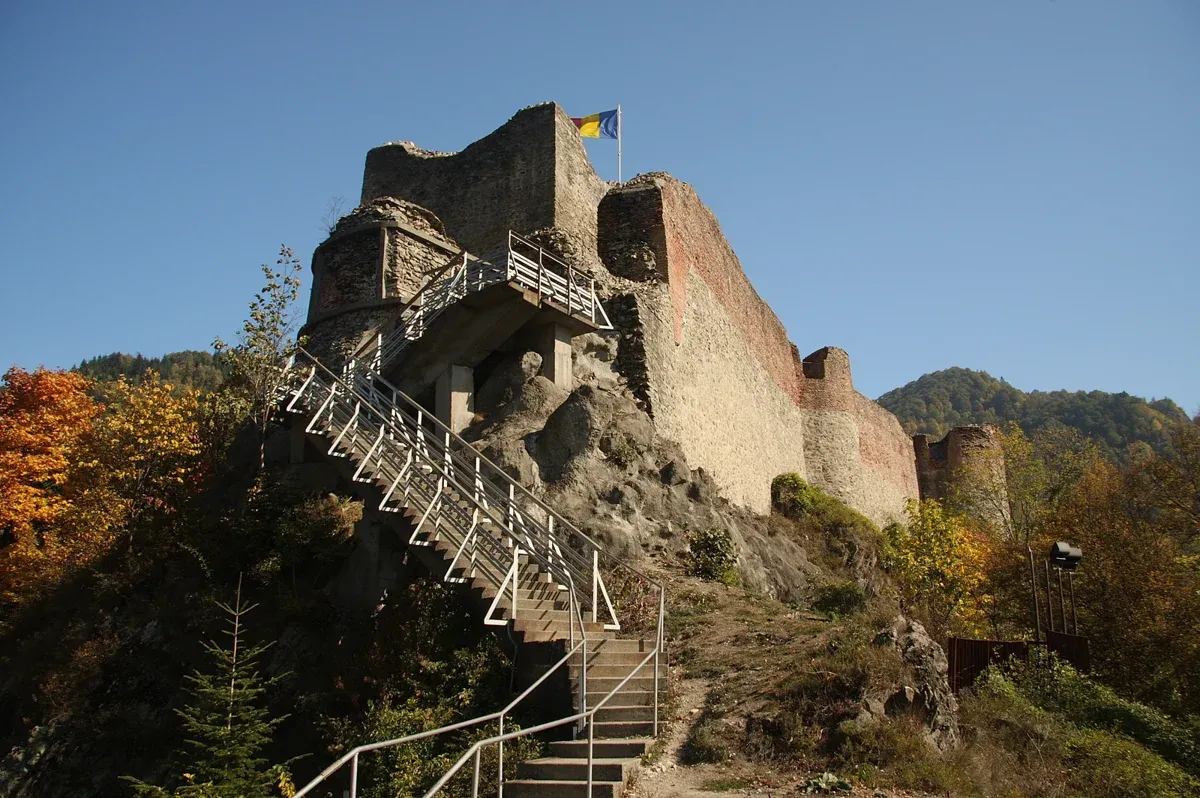
Poenari Fortress and its access stairs. Photo: Petr Kraumann, CC BY 3.0, via Wikimedia Commons.
Quick answer Poenari in brief: location, Vlad link, the climb, tickets and hours
Poenari Castle is a ruin, not a furnished castle. It stands at Arefu in Arges County, above the Arges valley at the south end of the Transfagarasan road. Vlad the Impaler repaired and consolidated it around 1459 and it served as one of his main fortresses. Access is by 1,480 concrete steps, about 30 to 45 minutes at a normal pace. It reopened on April 14 after three years of conservation work, and it is open daily from 10:00 to 18:00. No tour in the catalog on this site visits Poenari, so you need your own transport.
Key takeaways
- Poenari is the fortress Vlad the Impaler actually used, unlike Bran Castle, which he only passed near. See the honest comparison in our guide to where Dracula's Castle really is.
- The climb is 1,480 steps through forest, roughly 30 to 45 minutes up at a normal pace.
- Tickets cost 30 lei ($6.31) for adults, and the site is open daily from 10:00 to 18:00 with the last group entry at 17:00.
- If you want Vlad rather than Bran on a guided day, the closest options in the catalog are Dracula's Castle and Birthplace Tour: Bran and Sighisoara from Cluj-Napoca and Dracula's Tomb at Snagov Monastery and Slanic Salt Mine Day Trip from Bucharest.
- Most travellers pair a Bran trip with Bucharest logistics, so check how to get to Bran Castle from Bucharest if Poenari does not fit your route.
Should you go to Poenari or Bran?
If You want the castle with the strongest documented link to Vlad the Impaler
Go to Poenari. Vlad rebuilt it and used it as a main fortress. Bran, which he only passed near, is covered on every trip from Bucharest, starting with Dracula's Castle, Peles Castle and Brasov Day Trip from Bucharest.
If You want furnished rooms, exhibits and a cafe
Choose Bran. It is a working museum with Queen Marie's furniture, the Torture Rooms and the Time Tunnel. Poenari is bare stone walls and a view.
If You have no car
Choose Bran. Buses and day tours serve it. Poenari is about 4 hours by road from Bucharest and there is no practical public transport option stated by the sources we use.
If You are driving the Transfagarasan in summer
Add Poenari. The fortress sits near the southern end of the road, so the climb fits naturally into a mountain-driving day.
If You want Vlad history on a guided day from a city
Take the Dracula's Castle and Birthplace Tour: Bran and Sighisoara from Cluj-Napoca from Cluj, or the Snagov tomb day from Bucharest, since neither Poenari nor his biography is covered by trips from Bucharest or Brasov.
Where is Poenari Castle?
Poenari Fortress stands on Mount Cetatea, high above the Arges valley, at Arefu in Arges County in southern Romania. It faces the Transfagarasan road close to its southern end, with the Fagaras Mountains behind it. That position explains its purpose: a stronghold controlling the Arges valley, far from any town centre and deliberately hard to approach.
For orientation against the castle most visitors know, Bran sits in the village of Bran, 25 km (16 mi) southwest of Brasov, on the old border between Transylvania and Wallachia. Poenari is much further south, in Wallachia proper, in Vlad's own principality. The two castles are in different counties, on different sides of the mountains, and serve completely different itineraries.
The history of Poenari Fortress
A castle stood on Mount Cetatea from the 13th or 14th century. Its transformation into the fortress people climb to today came in the second half of the 1450s, when Vlad the Impaler repaired and consolidated the site around 1459 and made it one of his main fortresses. This is the documented link that Poenari's reputation rests on.
Unlike Bran, where historians find no significant role for Vlad, Poenari was his own building project in his own principality.
The fortress did not stay in use for long. It was abandoned in the first half of the 16th century and lay in ruins by the 17th. A landslide in January 1913 brought down part of the structure.
What you visit today is a conserved ruin, which is exactly what it is: walls, foundations and stairways, not interiors. A smaller replica of Poenari was built in 1906 in Carol Park in Bucharest, and it is one of the few places you can see the silhouette of the fortress without making the climb.
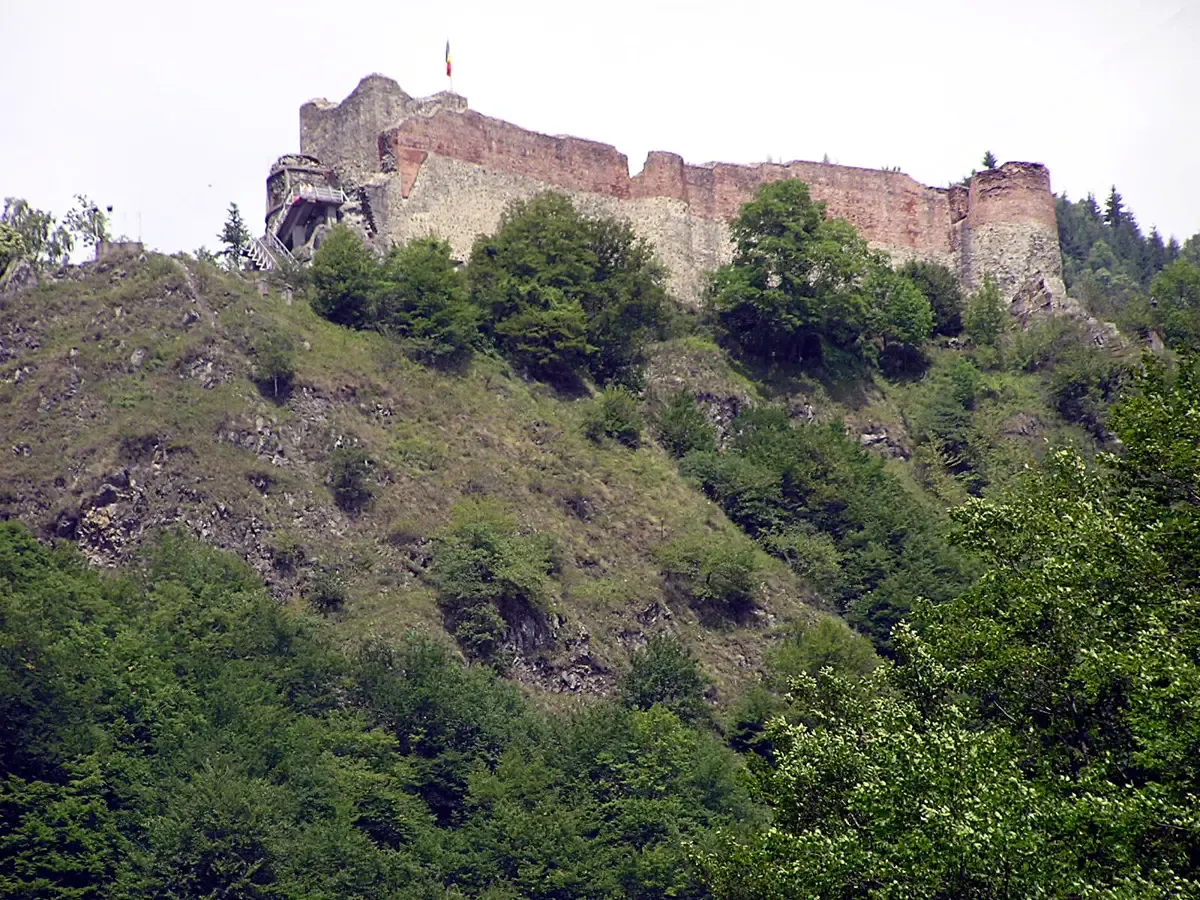
Poenari Castle in Arges County. Photo: L.Kenzel, CC BY-SA 3.0, via Wikimedia Commons.
The 1,480 steps
There is no road or cable car to the fortress. Access is on foot, up 1,480 concrete steps through the forest. At a normal pace the climb takes about 30 to 45 minutes, and the descent is easier on the clock but harder on the knees.
Wear proper shoes and bring water.
The climb is the reason many people either love or skip Poenari. It filters out crowds in a way Bran never can, and it is a real physical commitment, far more climbing than the stairs inside Bran. If you are planning a Bran day trip and want a sense of what stairs there feel like, our Bran Castle tickets guide covers access and entry in detail.
At Poenari, pace yourself and count on the better part of two hours for the round trip including time at the top.
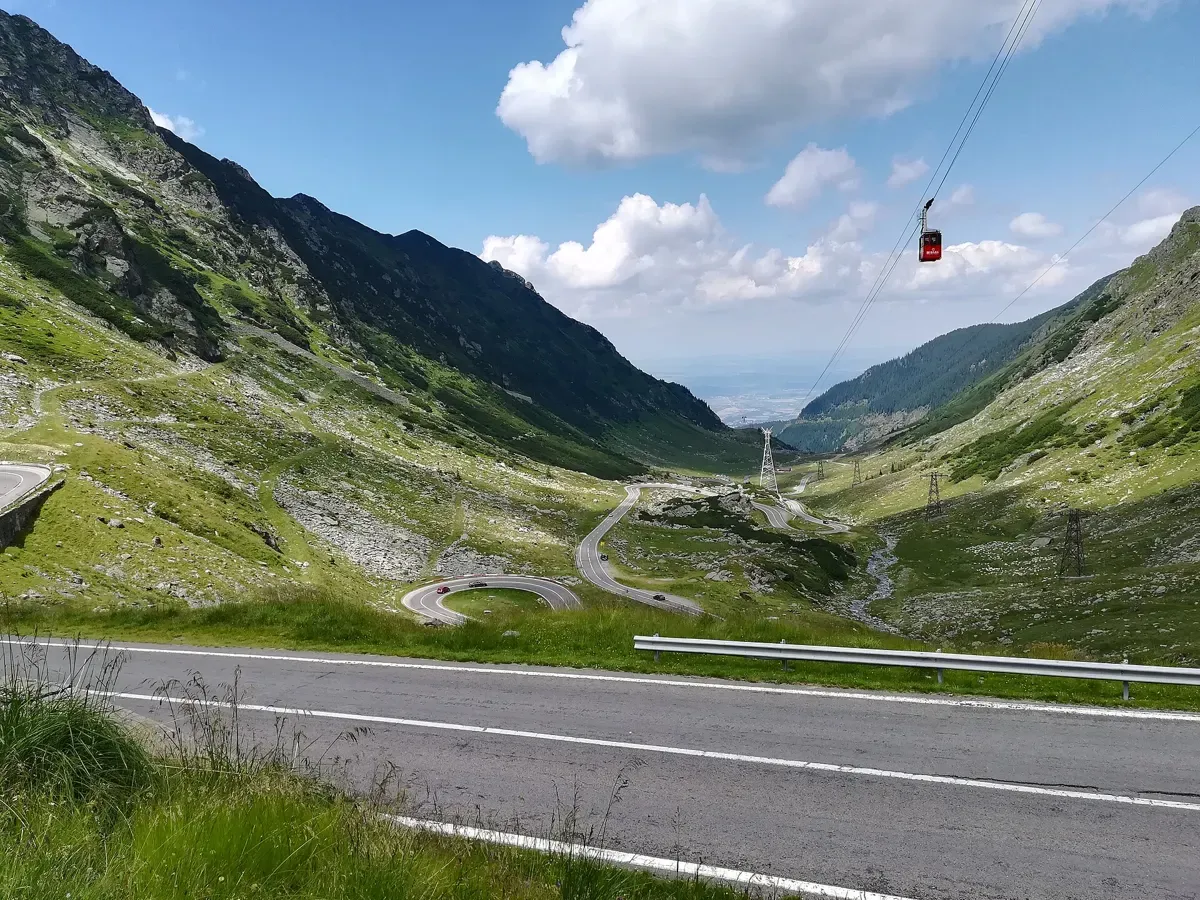
The Transfagarasan road, heading north. Photo: Michał Derela, CC BY-SA 4.0, via Wikimedia Commons.
Tickets, hours and the reopening
Poenari reopened on April 14 after three years of conservation and restoration works worth over 25 million lei. The fortress draws over 100,000 visitors a year, and the restored site is open daily with a simple ticket structure. Tickets are sold on site or online through the Arges Tourist Pass.
The official sources we use do not state any closure days outside daily opening hours.
Prices are straightforward and much lower than Bran. Here is what the official information gives, converted at 1 US dollar = 4.75 lei.
| Ticket | Price in lei | In dollars |
|---|---|---|
| Adult | 30 lei | $6.31 |
| Pupils, students and pensioners | 20 lei | $4.21 |
Opening hours and practical rules, as published after the reopening:
- Open daily from 10:00 to 18:00.
- Last group entry at 17:00.
- Tickets on site or online through the Arges Tourist Pass.
- Access only on foot, by the 1,480-step stairway.
Ticket prices and hours come from the Agerpres report on the reopening, the history from the Poenari Castle article on Wikipedia.
Bran Castle vs Poenari Castle
This is the comparison most readers are really asking about: the castle marketed as Dracula's against the fortress Vlad actually used. The figures below come from the castle's official information, the Brasov small-group listing and published data on Poenari.
| Detail | Bran Castle | Poenari Castle |
|---|---|---|
| Location | Bran village, 25 km (16 mi) southwest of Brasov | Mount Cetatea at Arefu, Arges County, above the Arges valley |
| Vlad the Impaler link | No significant documented role, though he passed through the Bran Gorge | Rebuilt by Vlad around 1459 and one of his main fortresses |
| What is inside | Furnished museum, Queen Marie's collection, Torture Rooms, Time Tunnel | A ruin, walls and foundations, no interiors |
| Access | Road, parking, bus stop near the entrance | 1,480 steps on foot, 30-45 minutes up |
| Adult entry | 100 lei ($21.04) | 30 lei ($6.31) |
| Time needed | 1.5 to 2 hours | Around 2 to 3 hours including the climb |
| Tour access | Most trips compared here | None of the catalog trips |
Read as a whole, the table says one thing. Bran is the easier, richer, better-served visit and is a museum first. Poenari is the historically honest Vlad site and a physical commitment first.
You can compare the Bran options in detail across DraculaCastleTours.com, where every listing is broken down by price, duration and what is actually included.
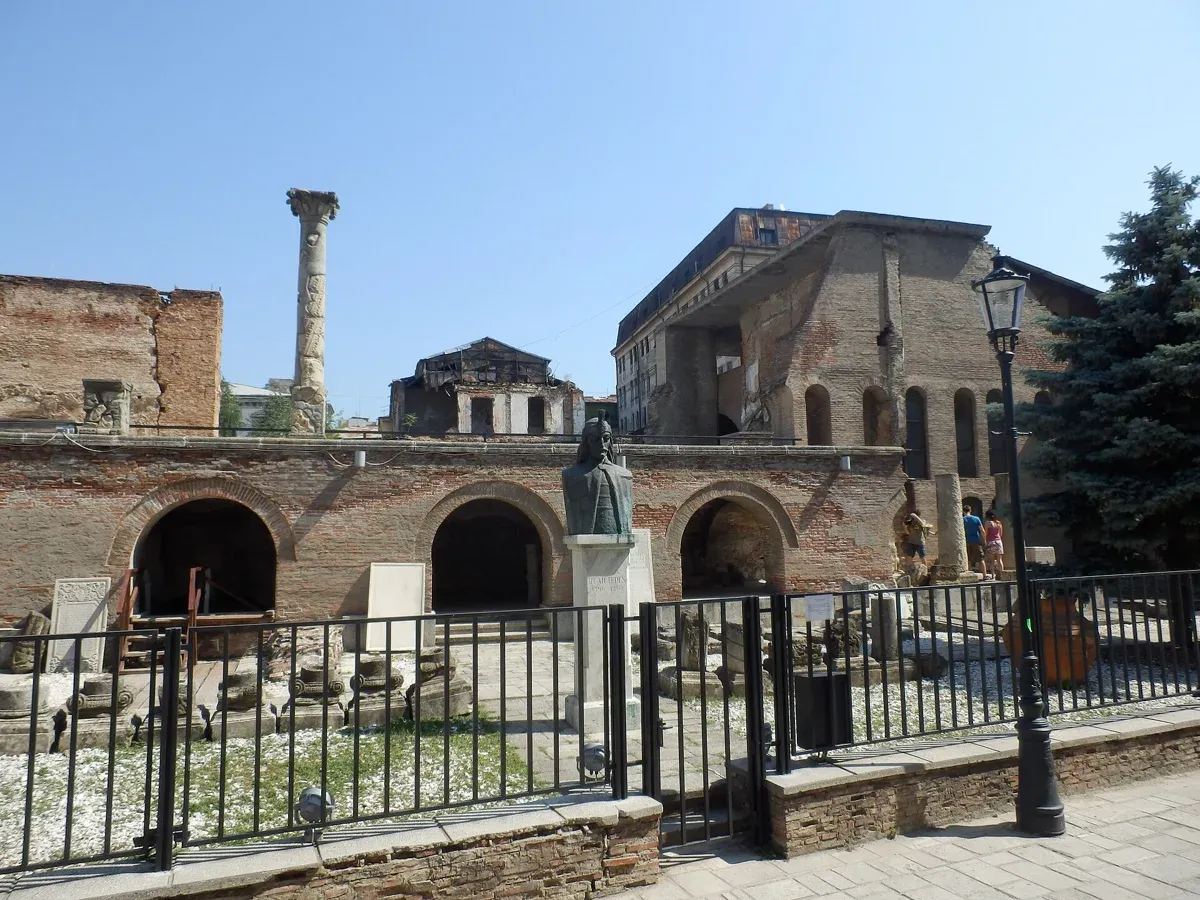
The Old Princely Court (Curtea Veche), Bucharest. Photo: Stefan Jurca from Munich, Germany, CC BY-SA 2.0, via Wikimedia Commons.
How to get to Poenari Castle
There is no practical public transport route to the fortress stated by the sources we use, so the realistic option is a car. From Bucharest it is about 4 hours by road, which makes Poenari a full-day drive there and back before you even start the climb. Compare that with Bran, 160 km (99 mi) from Bucharest and about 2.5 hours by car on DN1/E60, or 30 km (19 mi) and 35 minutes from Brasov.
| Route | Distance | Driving time |
|---|---|---|
| Bucharest to Poenari | not stated | about 4 hours |
| Bucharest to Bran | 160 km (99 mi) | about 2.5 hours |
| Brasov to Bran | 30 km (19 mi) | about 35 minutes |
The fortress sits near the southern end of the Transfagarasan, the high mountain road over the Fagaras Mountains. The road is usually open only in summer, so a Poenari trip that combines the drive over the pass belongs to the warm months. Outside the pass season you can still reach Arefu from the south, but check road conditions before you set out, since the sources do not give a fixed opening calendar for the road itself.
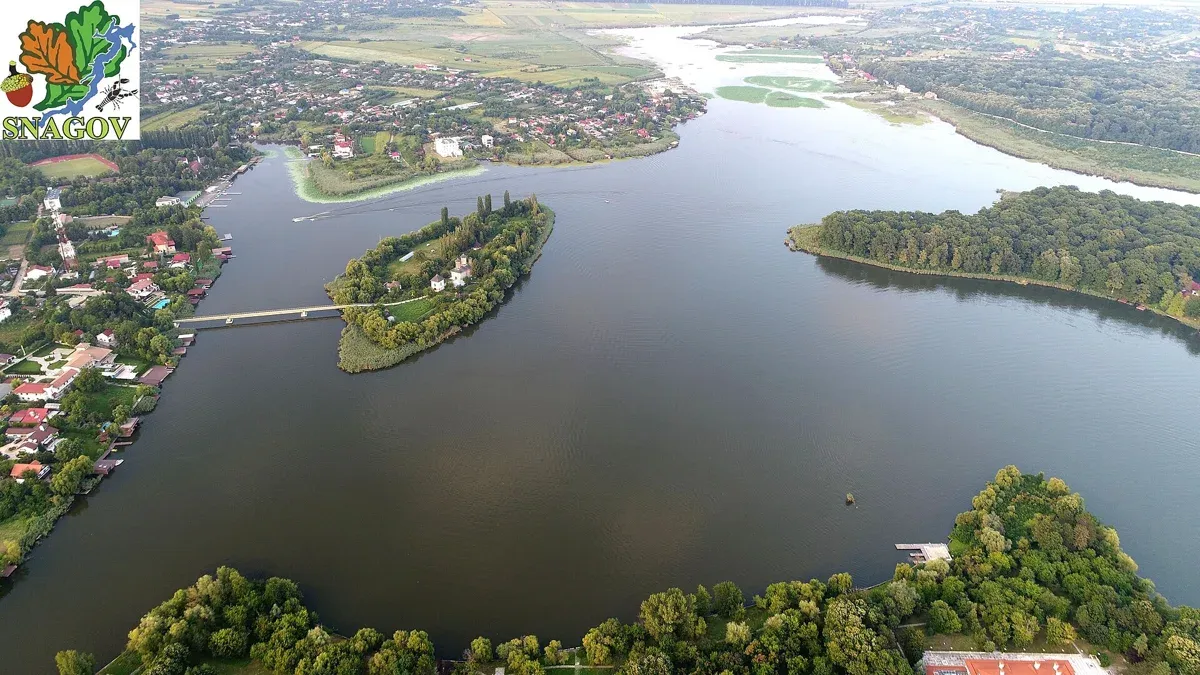
Lake Snagov and the monastery island from the air. Photo: Constantin Turmac, CC BY-SA 4.0, via Wikimedia Commons.
When to go
Summer is the practical window if you want to drive the Transfagarasan as part of the day, and it is also when the stairway is driest and the days longest. The catch is heat and crowds. Average afternoon highs around the region reach 23°C (74°F) in July and August, and the fortress already draws over 100,000 visitors a year, so start early to climb in cooler air.
Spring and autumn work well if you skip the pass, with highs of 13°C (55°F) in April and 13°C (56°F) in October, though rain is likelier in spring.
Winter is the hardest season. Night lows around Bran, the nearest station in our climate data, average -4.3°C (24°F) in December, and ice on a forest stairway is a serious hazard. The published hours run daily all year, but the sources do not state how the stairway is managed in freezing conditions, so treat a cold-season climb as your own risk assessment.
Poenari, Bran and Snagov in One Trip
Many visitors want all three Vlad stories in one trip, and the geography makes that a three-day plan rather than one day. Poenari sits south of the Fagaras Mountains in Arges County, Bran north of the Bucegi near Brasov, and Snagov just north of Bucharest. The table sets out how the pieces fit, with the figures from the official sources and the listings compared here.
| Site | From Bucharest | Entry | How to get there |
|---|---|---|---|
| Snagov Monastery | 45 km (28 mi), about 40 minutes | Ticket option on the tour | Dracula's tomb at Snagov and the salt mine, 6 hours |
| Bran Castle | 160 km (99 mi), about 2.5 hours | 100 lei ($21.04) | Dracula's Castle day trip from Bucharest, 11-12 hours |
| Poenari Fortress | About 4 hours by road | 30 lei ($6.31) | Your own car, no tour in the catalog |
A sensible order
Start with the short Snagov half day from Bucharest, take a coach or a private day to Bran on the next day, and keep Poenari for a summer drive when the Transfagarasan is open, sleeping near the Arges valley so that you climb the 1,480 steps in the cool of the morning. The fortress opens at 10:00 and the last group goes up at 17:00, which leaves room for a late start after the drive. Carry water and wear proper shoes, since the climb is the whole approach and there is no road to the walls.
Can you visit Poenari on a tour?
Here is the honest note this page owes you: no tour in the catalog compared on this site goes to Poenari. Every trip listed serves Bran Castle, from the Bucharest coaches to the Brasov small-group days, and the site does not run tours itself, it compares listings. If you want Poenari, you rent a car and build the day yourself, ideally with the Transfagarasan in summer.
If your real goal is the true story of Vlad the Impaler on a guided day, two catalog trips come closest. From Cluj-Napoca, Dracula's Castle and Birthplace Tour: Bran and Sighisoara from Cluj-Napoca visits Sighisoara, the citadel town where Vlad was born, and includes the Bran Castle ticket in the price at $164 per person. From Bucharest, Dracula's Tomb at Snagov Monastery and Slanic Salt Mine Day Trip from Bucharest goes to the island monastery where Vlad III is believed to be buried, at $21 per person for a 6-hour day.
For the Bran side of the legend, the trips compared here range from a $22 coach day to a $170.51 private tour from Bucharest, and from $55 to $77.82 per person from Brasov. Pick by departure city and group size, not by promises about Vlad, because Bran itself cannot deliver that part. Our guide to the best time to visit Bran Castle helps with the crowds question on any of them.
Setting expectations: a ruin, not a castle
Say it plainly, as we do throughout: Poenari is a ruin. There are no furnished rooms and no exhibits. What you get is the stone shell of a 15th-century fortress, the satisfaction of the climb and one of the widest views in the Arges valley.
Travellers who arrive expecting Bran's museum interiors are the ones who leave disappointed, so go for the history and the viewpoint, not for castle comforts.
That honesty cuts both ways. If bare walls and 1,480 steps sound like your kind of day, Poenari delivers something no commercialized castle can: the place Vlad actually fortified. If they sound like a chore, book a Bran day and enjoy it for what it is, a beautifully kept museum with a legend attached.
Questions and Answers
Can you go inside Poenari Castle?
You can enter the fortress itself, but there is very little inside. Poenari is a conserved ruin, so you walk among walls, foundations and stairways with open views over the Arges valley. If you want furnished rooms and museum exhibits, Bran Castle is the visit that offers them, as our where is Dracula's Castle guide explains.
What happened to Poenari Castle?
Vlad the Impaler rebuilt it around 1459 and it served as one of his main fortresses, but it was abandoned in the first half of the 16th century and was in ruins by the 17th. A landslide in January 1913 brought down part of it. It reopened on April 14 after three years of conservation and restoration works worth over 25 million lei.
How many steps are at Poenari Castle?
There are 1,480 concrete steps through the forest, and the climb takes about 30 to 45 minutes at a normal pace. There is no other way up. Count on the better part of two hours for the round trip, plus time at the fortress.
How do you get to Poenari Castle?
By car is the realistic option, about 4 hours by road from Bucharest. The fortress stands at Arefu in Arges County, near the southern end of the Transfagarasan, a high mountain road usually open only in summer. The sources we use state no practical public transport link.
Is Poenari the real Dracula castle?
In the sense of the real Vlad the Impaler, yes, Poenari is the strongest documented site, since he rebuilt it and used it as a main fortress. Bran Castle, marketed abroad as Dracula's Castle, has no significant documented role for Vlad, and Bram Stoker never described Bran in his novel. If the real Vlad story is your goal on a guided day, the closest catalog option is Dracula's Castle and Birthplace Tour: Bran and Sighisoara from Cluj-Napoca.
How much does Poenari Castle cost?
Adult tickets cost 30 lei ($6.31), and pupils, students and pensioners pay 20 lei ($4.21). Tickets are sold on site or online through the Arges Tourist Pass. The site is open daily from 10:00 to 18:00 with the last group entry at 17:00.